
Measure Recovery
How can we objectively characterise recovery beyond conventional clinical assessments?


Rehab45 · University of Leeds
We build learning rehabilitation systems: measuring how people recover, understanding how they respond to treatment, and helping clinicians personalise rehabilitation across the clinic, community and home.
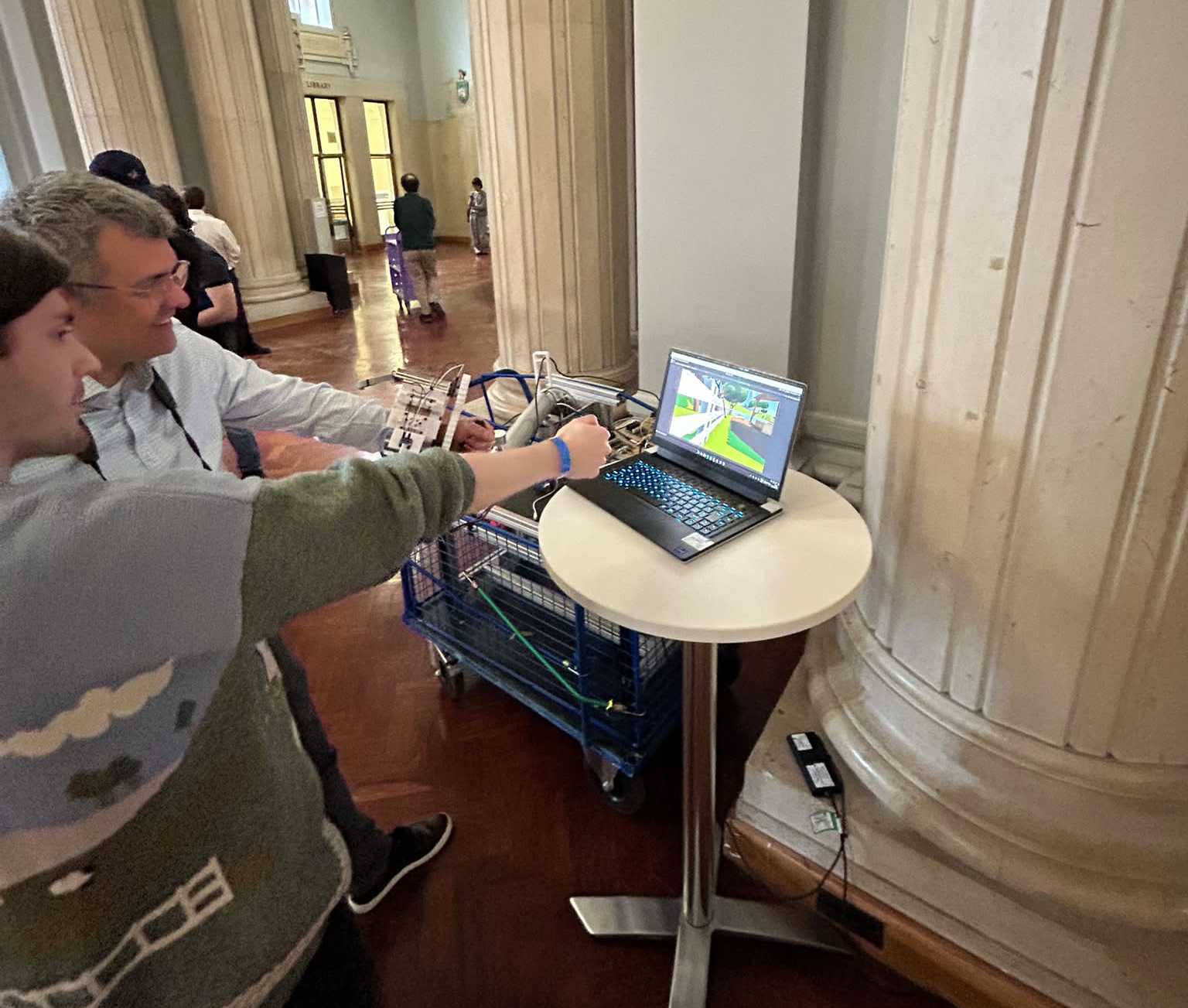


From lab-based discovery to scalable implementation, our work connects evidence, engineering and end users.

 Based in the UK
We want rehabilitation to move beyond fixed programmes and occasional assessments towards a system that understands how each person is recovering, learns how they respond to treatment and helps clinicians provide the right rehabilitation at the right time.
Our long-term ambition is to make highly personalised rehabilitation possible at scale, from specialist centres through community services and into people's homes.
We bring together rehabilitation engineering, artificial intelligence, biomechanics, neuroscience and clinical research to understand individual recovery and develop technologies that can improve rehabilitation decisions and delivery.
Much of our work has been developed with people recovering from stroke, and we apply the same approaches across neurological rehabilitation.
People recovering from neurological injury differ considerably. Yet much of rehabilitation is still informed by intermittent assessments and relatively standard treatment pathways.
Rehab45 is working to close this gap. Our research asks how technology can help us understand recovery in greater detail and use that information to provide better, more responsive rehabilitation.
They differ in:

We turn the challenge into a research programme through five connected steps. Together they form what we describe as a learning rehabilitation system: rehabilitation that measures how each person recovers, learns how they respond to treatment and adapts.
Every step keeps the clinician in the loop. Technology measures, models and proposes; clinicians and patients decide.
We develop technologies that provide objective information about movement, function, behaviour and rehabilitation.
We use biomechanics, data science and artificial intelligence to understand recovery and individual responses to treatment.
We investigate how this information can support clinicians and patients in making better rehabilitation decisions.
We develop new ways of providing intensive, engaging and personalised rehabilitation across clinical, community and home environments.
Every rehabilitation experience provides an opportunity to understand recovery better and improve rehabilitation for future patients.
We organise our work around questions about recovery, not around technologies. Each question maps onto a step of the cycle above, and each is answered through the projects on our Research page.
How can we objectively characterise recovery beyond conventional clinical assessments?

Why do some people respond differently to rehabilitation?

Can rehabilitation respond to the individual rather than following a fixed programme?

How can effective rehabilitation continue across hospitals, community services and people's homes?
People recovering from neurological injury or living with a neurological condition face many of the same rehabilitation challenges: how much practice they need, how they respond to it, whether improvements carry into everyday life, and how rehabilitation can continue beyond the clinic.
Stroke is a good example. It is one of the major causes of long-term adult disability, and much of our work has been developed and validated with stroke survivors. Current projects also include people living with multiple sclerosis, people with cerebral palsy and people receiving palliative care, and we welcome collaborations across neurological conditions. Part of our work is finding out which principles and technologies transfer between conditions, and which need to be adapted.
Across conditions, we study:
Robots, sensors, games, models and the software that connects them, built in our lab and evaluated with clinicians and patients. Each area serves a step of the cycle above.
Robots that guide, assist and measure movement, in the clinic and at home.
Models that learn how people recover and how rehabilitation should adapt.
Decoding intention so that it can drive rehabilitation devices.
Muscle activity and low-cost inertial sensors for measurement outside the lab.
Motion capture and musculoskeletal modelling to quantify movement.
Games and interactive environments that make practice engaging.
Pairing rehabilitation technology with electrical and transcranial stimulation.
Remote-supervised systems that extend rehabilitation into the home.
Rehab45 works closely with clinical services and rehabilitation partners so that research addresses genuine problems faced by patients, clinicians and healthcare systems.
Our aim is to develop technologies and approaches that can work within real rehabilitation pathways, not only within research laboratories. Clinicians from Leeds Teaching Hospitals NHS Trust and the National Rehabilitation Centre research programme are part of the team, and this clinical integration is central to how we develop and evaluate new ideas.
We are particularly interested in rehabilitation that continues across specialist care, community rehabilitation and home, and in how technology can support clinicians at each stage rather than replace them.
Objective measurement and early decisions
Adaptive rehabilitation with the clinician in the loop
Connected technologies for real-world use
People living with stroke and other neurological conditions help determine which problems Rehab45 works on, which outcomes matter and how technologies should be designed.
Patient and public involvement is part of our research process rather than a separate activity. It shapes the questions we ask, the measures we choose and the way our technologies look, feel and fit into everyday life.
Current PhD project
Reinforcement learning that guides a simple robotic interface to support safe, adaptive whole-arm rehabilitation.
View project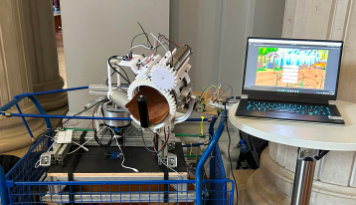
MEng project, 2026
A low-cost robot and game environment for intensive upper-limb practice at home.
View project
MEng project, 2026
EEG and EMG assessment, biomechanical validation and a control proposal for home-based rehabilitation.
View projectLooking to join us? PhD studentships and visiting positions.
We are an early-stage group with over 20 years of experience behind it. We are recruiting researchers, seeking clinical and academic collaborators, and developing partnerships with industry and the NHS.